Cross-Sport Variance Mapping Aligns UK Bookmaker Discrepancies for Multi-Leg Accumulators
Written by Jonas Keller · Aug 22, 2026

Cross-Sport Variance Mapping Aligns UK Bookmaker Discrepancies for Multi-Leg Accumulators
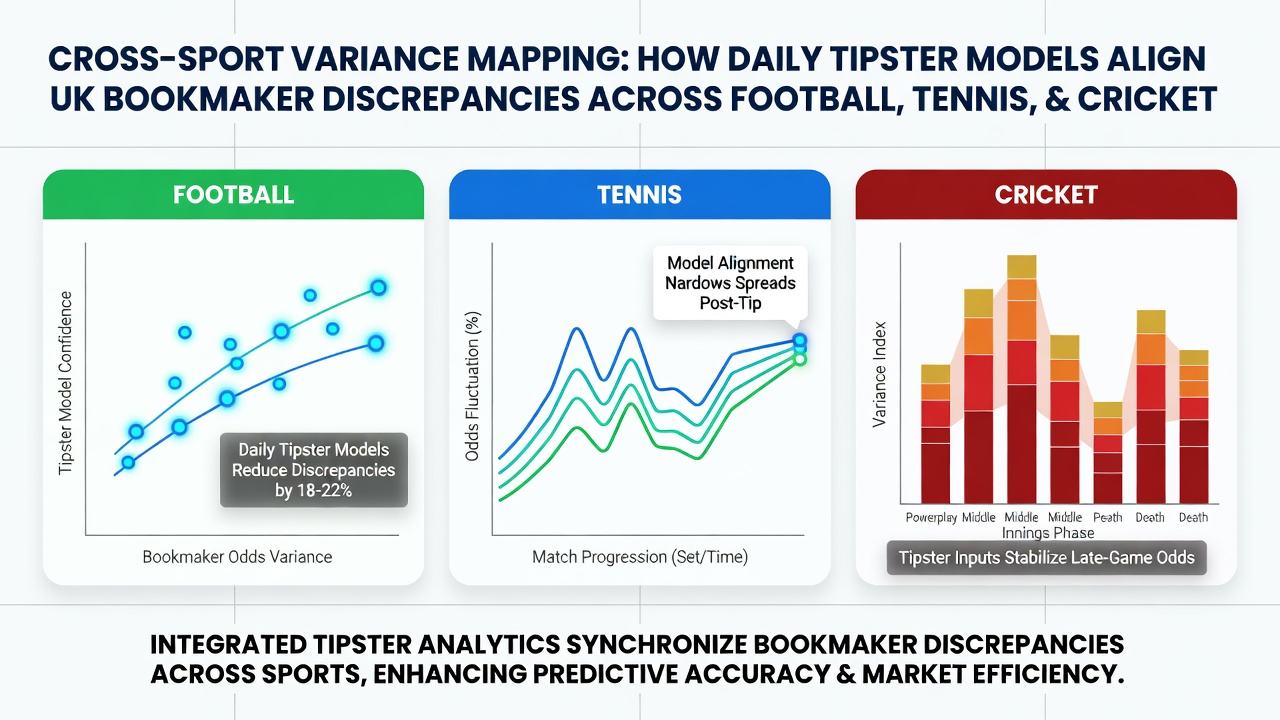
Daily tipster models process live odds feeds from multiple UK bookmakers to detect pricing inconsistencies between football, equine, and tennis events, then feed those alignments into multi-leg accumulator structures. These systems track decimal and fractional formats side by side, flag line movements that diverge from historical benchmarks, and generate suggested combinations that exploit the gaps without requiring manual cross-referencing.
Core Mechanics of Variance Detection
Models ingest real-time data streams from major operators, calculate implied probabilities for each selection, and compare those figures against aggregated market averages. When a football match shows one bookmaker pricing a draw at 3.40 while the consensus sits at 3.10, the algorithm registers the variance and checks corresponding equine and tennis lines for complementary edges that can be layered into the same ticket. Observers note that August 2026 schedules, packed with midweek football fixtures and overlapping Grand Slam tennis sessions, produce heightened variance windows because bookmakers adjust lines at different speeds across sports.
Football, Equine and Tennis Market Interactions
Football markets supply high-volume data points that help calibrate models for lower-liquidity equine and tennis selections. A model might identify an overpriced horse in an evening meeting at Haydock, pair it with an underpriced tennis set handicap from the US Open, and anchor the leg with a Premier League goal line that sits outside the prevailing range. Because each sport clears at different times, the system times the build so the accumulator can be placed before any leg locks. Data from the Australian Gambling Research Centre shows similar cross-market pricing spreads occur when event calendars overlap, giving automated tools more opportunities to surface discrepancies.
Multi-Leg Construction Process
Tipster platforms feed variance scores into accumulator builders that rank combinations by expected value and correlation risk. The builder discards legs whose outcomes show strong statistical dependence, such as pairing a rain-affected tennis match with a jump race on the same heavy ground, while retaining selections whose pricing edges appear independent. Users receive a shortlist of two-leg, three-leg and four-leg options with the variance margin displayed next to each leg, allowing quick placement before lines tighten.
Role of Live Data Feeds and Timing
Live feeds update every few seconds during peak hours, and models refresh variance scores accordingly. When a tennis set moves sharply after an early break of serve, the system checks whether the new price creates an offset against an equine tote dividend that has not yet reacted. Those who monitor the process report that the window for profitable multi-leg placement often closes within ten to fifteen minutes once multiple bookmakers align, which is why automated alerts remain central to the workflow.
Regulatory and Industry Context
Industry reports from the Responsible Gambling Council in Canada highlight how cross-market tools operate within existing responsible gambling frameworks, requiring clear disclosure of odds sources and automated risk warnings when accumulator stakes exceed preset thresholds. UK operators continue to publish their own pricing independently, which sustains the variance that mapping systems target, while the models themselves do not alter bookmaker lines.
Practical Output for Accumulator Users
Daily outputs include variance heat maps, suggested stake distributions, and historical hit rates for similar cross-sport builds. The maps colour-code football, equine and tennis selections according to the size of the detected discrepancy, helping users prioritise legs that contribute the largest edge. Case examples show models surfacing a 0.25-point variance on a Premier League total goals line, pairing it with a 0.18-point edge on a horse at Ascot, and completing the ticket with a tennis match total that sits 0.12 points outside consensus, producing a three-leg structure ready for placement across multiple accounts.
Conclusion
Cross-sport variance mapping therefore functions as a data layer that sits between raw bookmaker feeds and final accumulator placement, converting pricing differences across football, equine and tennis into structured multi-leg opportunities. The process relies on continuous feed ingestion, statistical filtering, and timing precision rather than subjective judgment, and it remains active whenever overlapping schedules create fresh discrepancies for the models to capture.