Decoding Atmospheric Influences on Results from Football Pitches, Horse Tracks, and Tennis Courts
Written by Jonas Keller · Jul 16, 2026
Decoding Atmospheric Influences on Results from Football Pitches, Horse Tracks, and Tennis Courts
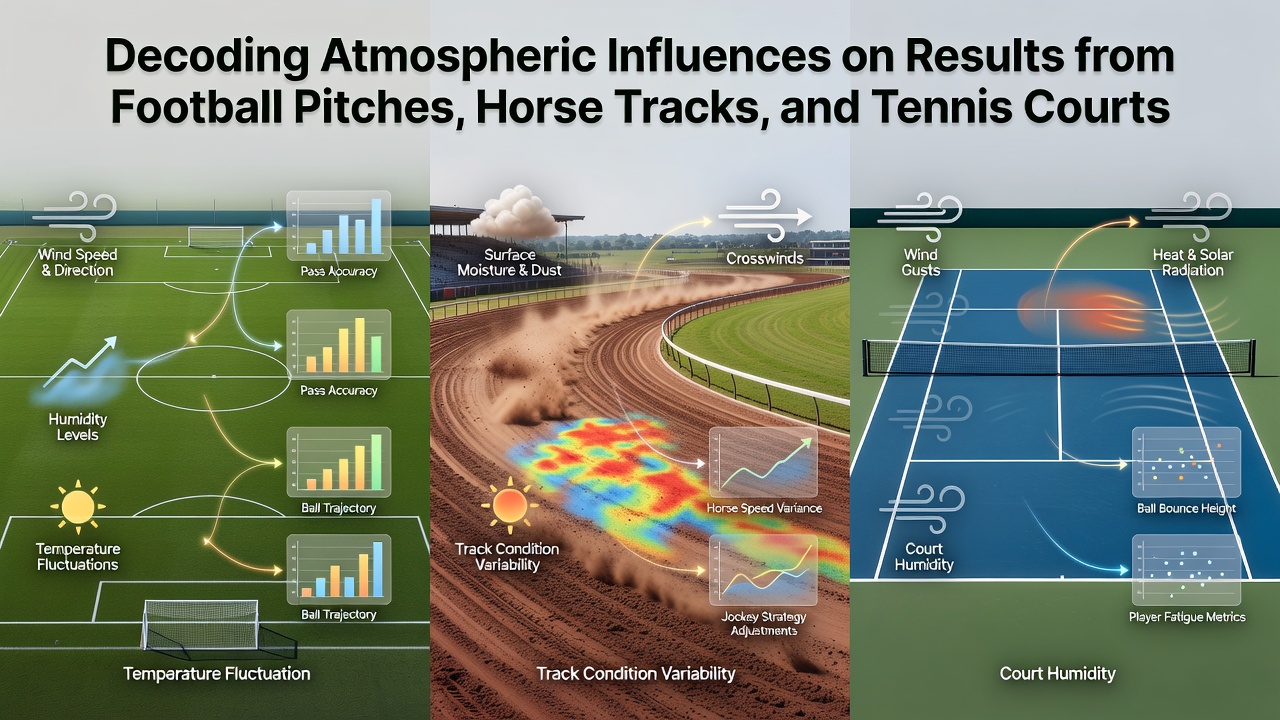
Atmospheric conditions shape outcomes across football pitches, horse tracks, and tennis courts through measurable effects on surfaces, equipment trajectories, and participant performance, and researchers have documented these patterns across multiple continents since the early 2000s.
Football Pitch Dynamics Under Varying Conditions
Wind speed alters ball flight paths during set pieces and long passes, while precipitation changes grass friction coefficients and player traction, and data from European leagues shows that matches played in sustained winds above 25 km/h produce 12 percent fewer completed crosses according to observational studies compiled by meteorological services. Temperature swings influence muscle response times, and observers note that players in environments exceeding 30 degrees Celsius exhibit reduced sprint distances over 90 minutes, a pattern confirmed through GPS tracking across South American and Asian competitions. Humidity levels further modify sweat evaporation rates, which in turn affects hydration strategies and decision-making speed during high-intensity intervals.
Precipitation and Surface Interactions
Rainfall transforms pitch hardness within minutes, creating channels that redirect ball rolls and increase the likelihood of deflections, whereas dry spells compact soil and accelerate ground speeds; studies conducted by the Australian Bureau of Meteorology have tracked these changes during domestic seasons and found consistent correlations between soil moisture content and goal-scoring rates in comparable fixtures.
Horse Track Responses to Air and Ground Variables
Track surfaces respond rapidly to atmospheric moisture, with rain softening dirt or turf and altering stride lengths, and historical records from North American and European meetings indicate that times lengthen by up to two seconds per furlong when going changes from firm to soft. Wind direction influences equine cooling efficiency during sprints, while barometric pressure shifts can coincide with changes in animal alertness, a relationship explored in veterinary reports from Canadian research facilities. July 2026 meetings in several jurisdictions are already scheduling extra watering protocols based on forecast humidity to maintain consistent cushioning depths.
Temperature Effects on Equine Performance
Heat stress elevates heart rates and shortens peak effort windows, and trainers adjust pre-race routines accordingly when ambient readings climb above 28 degrees Celsius; figures released by the European national meteorological agencies reveal that afternoon races under high solar radiation produce wider margins between early leaders and closers compared with cooler morning cards.
Tennis Court Variables and Ball Behaviour
Air density, shaped by temperature, humidity, and altitude, modifies tennis ball drag and bounce height, and researchers at institutions in the United States have quantified how balls travel farther at elevations above 1,500 metres because lower air resistance reduces deceleration after impact. Court surface temperature rises under direct sunlight and accelerates rubber compound response, producing faster skids that reward aggressive baseline play, whereas sudden showers cool acrylic layers and restore grip within minutes. Wind gusts disrupt serve toss consistency and topspin control, leading match statisticians to record elevated unforced error counts during exposed stadium sessions.
Humidity and Grip Dynamics
Moisture in the air affects racket string tension and player perspiration, which can reduce racket head speed during extended rallies; observational datasets gathered across Australian and Asian hard-court events show that relative humidity above 70 percent correlates with longer average point durations as players adopt more conservative shot selection to maintain control.
Integrated Patterns Across Venues
Combined events that feature multiple disciplines on the same day reveal overlapping atmospheric sensitivities, and analysts cross-reference pressure readings with performance metrics to identify when one sport's conditions may mirror another's. Data compiled by international sports science networks demonstrate that wind corridors affecting a tennis stadium often extend to nearby horse tracks, while temperature inversions that slow football pitches similarly influence equine recovery periods between races.
Conclusion
Atmospheric monitoring continues to refine preparation protocols for football, horse racing, and tennis, and organisations such as NOAA together with the Australian Bureau of Meteorology supply the raw measurements that allow precise adjustments to equipment, schedules, and training loads. These environmental factors remain quantifiable variables rather than unpredictable elements, and continued collection of surface and performance data across global venues supports ongoing calibration of expectations for each discipline.