How Venue Microclimates Reshape Real-Time Pricing Across Multi-Discipline Wager Structures
Written by Dana Sullivan · Aug 27, 2026
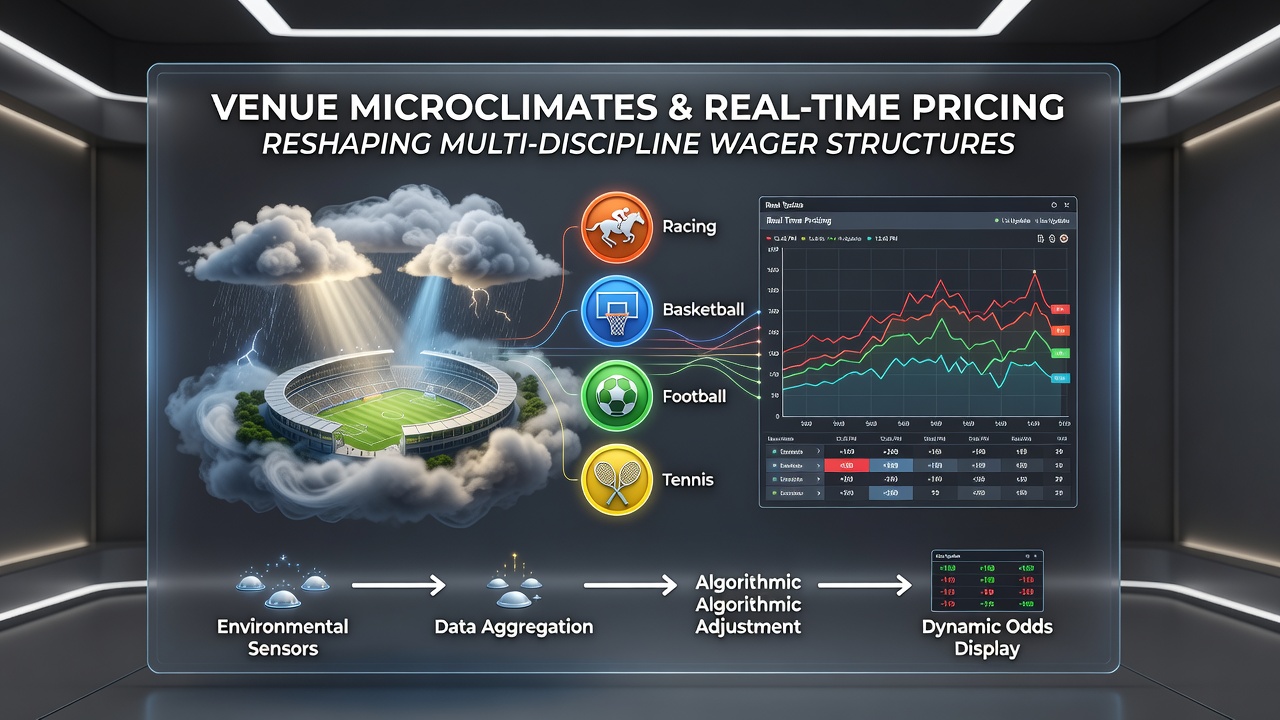
How Venue Microclimates Reshape Real-Time Pricing Across Multi-Discipline Wager Structures
Venue microclimates create localized atmospheric conditions that differ from surrounding regional forecasts, and these variations directly influence player performance metrics, animal exertion rates and surface characteristics in ways that reshape live betting markets. Observers note that bookmakers integrate real-time sensor data from individual sites to adjust odds across football matches, tennis tournaments and horse racing events, particularly when wager structures combine selections from multiple disciplines into single accumulators. Data from monitoring networks shows temperature gradients, humidity pockets and wind channeling around stadia and tracks can shift expected outcomes by measurable percentages within minutes.
Localized Weather Patterns and Performance Variables
Stadium architecture traps heat and alters airflow in patterns that standard weather services often miss, which means a football pitch in one corner of a city might experience different moisture levels than another venue just a few miles away. Researchers at sports science institutions have documented how these differences affect ball trajectory, player fatigue and injury risk during August schedules when summer heat combines with urban structures to produce distinct micro-environments. Tennis courts present similar challenges because enclosed or semi-enclosed designs create humidity traps that slow surface drying after brief showers, while open horse racing tracks expose runners to wind shear that changes track bias throughout an afternoon card.
Bookmakers track these factors through on-site instrumentation that feeds into algorithmic pricing engines, allowing odds to update continuously rather than at fixed intervals. Studies indicate that a two-degree temperature spike at one venue can alter expected goal probabilities in football by up to three percent, while comparable humidity changes on a tennis court influence serve speeds and rally lengths in measurable ways.
Real-Time Adjustments in Multi-Discipline Markets
When wager structures span several sports, microclimate effects compound because each leg responds to its own venue conditions independently. A sudden temperature drop at a horse racing track might lengthen finishing times and shift place probabilities, while simultaneous humidity changes at a tennis venue alter set durations and therefore cash-out values for accumulators that include both outcomes. Pricing systems must reconcile these asynchronous inputs while maintaining margin across the entire multi-leg product.

Industry reports from the European Gaming and Betting Association highlight how operators have expanded sensor networks at major venues to capture granular data that traditional forecasts overlook. In August 2026 several high-profile events across Europe demonstrated these adjustments in practice, with live pricing engines responding to localized wind patterns at one track and court-surface evaporation rates at another within the same accumulator window. The result appears in narrower margins on certain combinations and wider spreads on others depending on which venues exhibit the greatest deviation from expected conditions.
Data Integration and Algorithmic Responses
Modern pricing platforms combine meteorological feeds with historical performance databases that correlate specific microclimate variables to statistical outcomes. According to research published by the University of Melbourne's sports analytics group, models trained on venue-specific weather records improve prediction accuracy for endurance-based events by accounting for factors such as radiative cooling at night races and solar loading on daytime courts. These models then transmit updated probabilities to trading desks that recalibrate odds in real time.
Multi-discipline products require additional layers of synchronization because the time scales differ: a football half lasts forty-five minutes, a tennis set can vary widely, and horse races conclude in under two minutes. Pricing engines therefore weight microclimate impacts according to remaining duration and volatility, producing dynamic shifts that reflect both current conditions and projected changes through the remainder of each event.
Regulatory and Market Implications
Government agencies in Australia and Canada have begun requiring operators to disclose the data sources used for live pricing, including weather inputs, to ensure transparency for participants in multi-leg markets. These requirements emerged after analyses showed that unaccounted microclimate variations could create temporary pricing inefficiencies across combined football, tennis and racing selections. Market participants now access public sensor feeds from national meteorological services to anticipate adjustments before they appear in bookmaker interfaces.
Conclusion
Venue microclimates continue to influence real-time pricing mechanisms as operators refine sensor coverage and algorithmic models. The integration of localized atmospheric data into multi-discipline wager structures produces measurable shifts in odds that reflect actual performance variables rather than regional averages alone. Ongoing developments in monitoring technology and cross-sport data fusion indicate that these effects will remain central to pricing accuracy across football, tennis and horse racing markets.