Seasonal Pattern Analysis: How Weather Cycles Influence Multi-Sport Wager Construction on UK Platforms
Written by Petra Becker · Jun 25, 2026

Seasonal Pattern Analysis: How Weather Cycles Influence Multi-Sport Wager Construction on UK Platforms
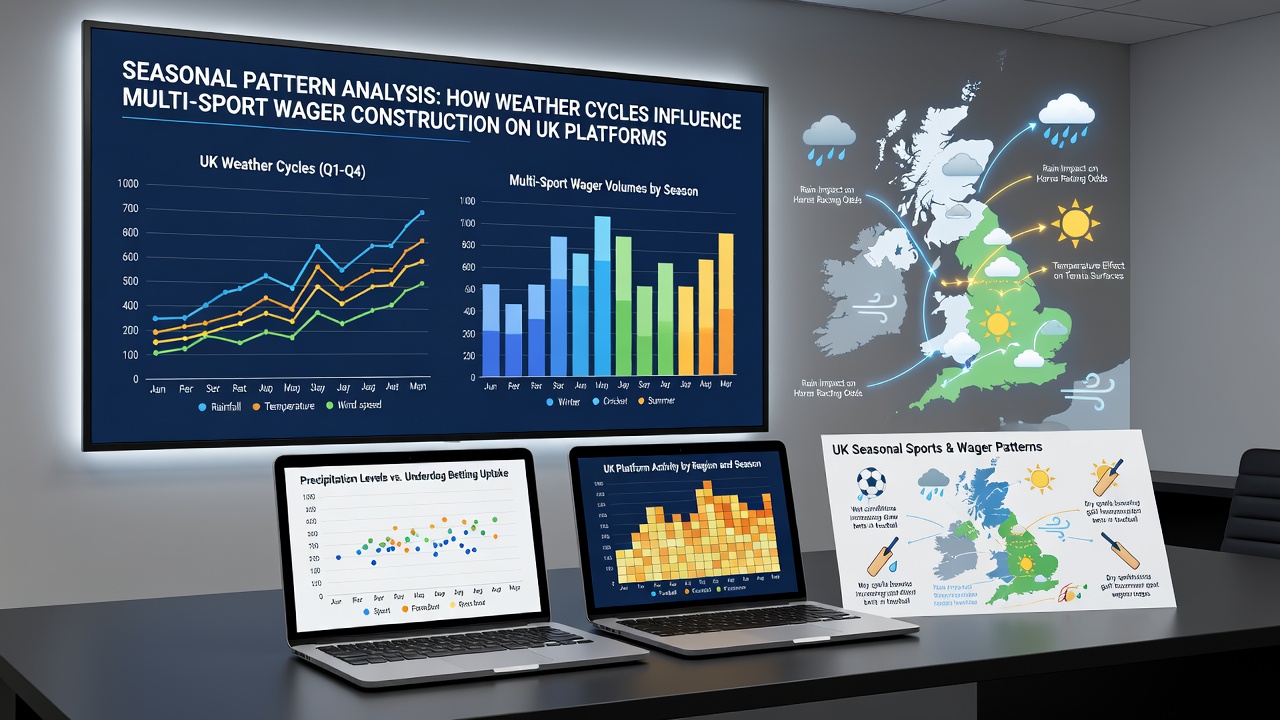
Weather cycles shape betting markets across multiple sports on UK platforms because rainfall patterns, temperature shifts, and wind variations alter playing conditions in horse racing, football, and tennis throughout the year. Data from meteorological records show that ground conditions in National Hunt racing change dramatically during wet winters while flat racing surfaces firm up under drier summer spells, and these same atmospheric shifts affect pitch drainage at football grounds and court speeds at outdoor tennis venues. Bettors who track these patterns construct multis that combine selections from different codes since correlated weather effects can influence outcomes across events scheduled on the same day or weekend.
Core Weather Variables in UK Sports Markets
Precipitation totals and temperature ranges stand out as primary drivers because they modify surface consistency and player performance metrics in measurable ways. Research from the Met Office indicates average monthly rainfall in southern England peaks between October and January while northern regions experience more consistent precipitation year-round, and these distributions directly feed into odds compilers' models for both turf and grass-based events. Temperature fluctuations matter equally since frost delays in winter disrupt racing schedules whereas summer heatwaves accelerate grass courts and increase fatigue in afternoon football fixtures. Observers note that wind speed data from coastal venues further refines these calculations because gusts above 25 mph alter ball trajectories in tennis and reduce effective distances in exposed horse racing tracks.
Horse Racing Ground Conditions and Seasonal Shifts
Official going reports issued by racecourses document how rainfall in the preceding 48 hours converts good-to-soft ground into heavy conditions that favor stamina-laden runners, and platforms adjust each-way payouts and place terms accordingly. During spring transitions, when soil moisture drops rapidly, punters often pair selections from northern tracks still holding moisture with southern fixtures already drying out, thereby spreading risk across divergent surfaces. Data collected over multiple seasons reveal that certain trainers achieve higher strike rates on specific ground states tied to calendar months, allowing multi-sport constructors to layer these runners with football teams that historically cover spreads under similar precipitation forecasts.
Football Pitch Dynamics Under Changing Weather
League matches played on waterlogged pitches produce fewer goals and more draw outcomes according to performance databases maintained by sports analytics firms, while frozen or hard surfaces increase injury rates and alter passing accuracy statistics. June 2026 falls within the close season for domestic leagues yet pre-season tours and international fixtures still occur, and forecast models already project typical early-summer dryness across southern grounds that will favor high-pressing teams. Constructors frequently combine these football selections with evening tennis matches because the same high-pressure systems that dry pitches also speed up grass courts at venues such as Queen's Club, creating parallel advantages for aggressive baseline players.
Tennis Court Speed and Atmospheric Effects
Grass court tournaments held between May and July respond quickly to humidity and temperature because low moisture hardens surfaces and shortens rallies, while rain delays force schedule changes that affect player recovery times. Historical match data compiled by the International Tennis Federation show serve percentages rising measurably on drier days, and these statistics integrate into live odds feeds that update within minutes of weather updates. Constructors who monitor radar imagery often add tennis legs to existing horse racing accumulators when forecasts indicate stable high pressure across southern England, since the same conditions that produce fast ground at Ascot also produce quick courts at Wimbledon warm-up events.
Constructing Cross-Sport Multis Using Seasonal Forecasts
UK platforms supply integrated dashboards that overlay Met Office forecasts onto fixture lists, enabling users to filter events by expected ground or court conditions before adding legs to a slip. A typical construction might start with a stamina horse at a rain-affected northern meeting, continue with an under-total goal selection at a midlands football ground under similar showers, and close with an over-serve tennis pick at an indoor venue where air conditioning neutralizes external humidity. Accuracy of these forecasts improves when longer-range models incorporate La Niña or El Niño phases that shift Atlantic jet streams and alter UK rainfall distribution for entire quarters. Industry reports from the European Centre for Medium-Range Weather Forecasts demonstrate that six-week outlooks achieve usable skill scores for precipitation anomalies, giving constructors time to plan multi-leg entries before odds shorten.
Data Integration Tools and Platform Features
Betting interfaces now embed weather widgets that display hourly rainfall probability alongside each market, and algorithmic filters automatically flag selections whose historical performance correlates with those probabilities. Researchers at several European universities have published papers demonstrating statistically significant edges when weather-adjusted models replace raw historical averages, particularly in handicap and total markets. Users combine these tools with exchange liquidity data because liquidity often concentrates on weather-sensitive outcomes during forecast updates, creating brief pricing discrepancies across correlated sports. June 2026 pre-season schedules already appear in early listings, and analysts expect similar integration of summer dryness projections into those markets once fixtures finalize.
Conclusion
Seasonal weather cycles provide measurable inputs that influence odds across horse racing, football, and tennis on UK platforms, adn constructors who systematically incorporate forecast data into multi-sport slips gain access to correlated variables unavailable when focusing on single codes. Ongoing improvements in meteorological resolution and platform tooling continue to refine these approaches without altering the underlying requirement for accurate surface and atmospheric assessment.