Weather's Hidden Impact on Live Betting Markets for Premier League Matches and National Hunt Races
Written by Nils Hansen · Jul 30, 2026

Weather's Hidden Impact on Live Betting Markets for Premier League Matches and National Hunt Races
Weather patterns reshape live betting dynamics across Premier League fixtures and National Hunt events because conditions alter player performance, pitch quality, and race surfaces in measurable ways. Data from multiple seasons shows that rain and wind frequently trigger rapid adjustments in in-play odds as bookmakers respond to unfolding events on the field or track. Observers note that these shifts create opportunities for bettors who monitor real-time variables rather than pre-match statistics alone.
How Precipitation Alters Premier League In-Play Markets
Heavy rainfall reduces ball speed and increases error rates during matches, which leads markets to adjust totals for goals and corners within minutes of weather changes. Studies conducted by European sports analytics groups indicate that matches played in sustained downpours record fewer shots on target compared with dry conditions, prompting live odds on over/under markets to move toward the under side. Wind gusts above 25 km/h further complicate passing accuracy, and analysts have documented corresponding drops in expected goal values that betting platforms incorporate into their algorithms almost instantly.
July 2026 forecasts from meteorological services highlight an increased likelihood of summer thunderstorms across northern England, which could affect early-season fixtures where pitches have not yet hardened from pre-season maintenance. Those who track these patterns observe that such conditions often coincide with higher volumes of live bets placed on defensive strategies and lower-scoring outcomes. Bookmakers adjust their models accordingly, incorporating radar data to anticipate when play might slow or when teams might shift to more direct approaches.
National Hunt Racing and Track Conditions Under Variable Weather
National Hunt events respond even more visibly to moisture levels because jumps courses depend on ground firmness for both speed and safety. Soft or heavy ground caused by overnight rain lengthens race times and raises the likelihood of fallers, which directly influences live markets on finishing positions and each-way payouts. Research from Australian racing authorities has shown that horses with proven mud-running records outperform expectations on wet tracks by margins that exceed historical averages, leading exchanges to reprice contenders mid-race as conditions evolve.
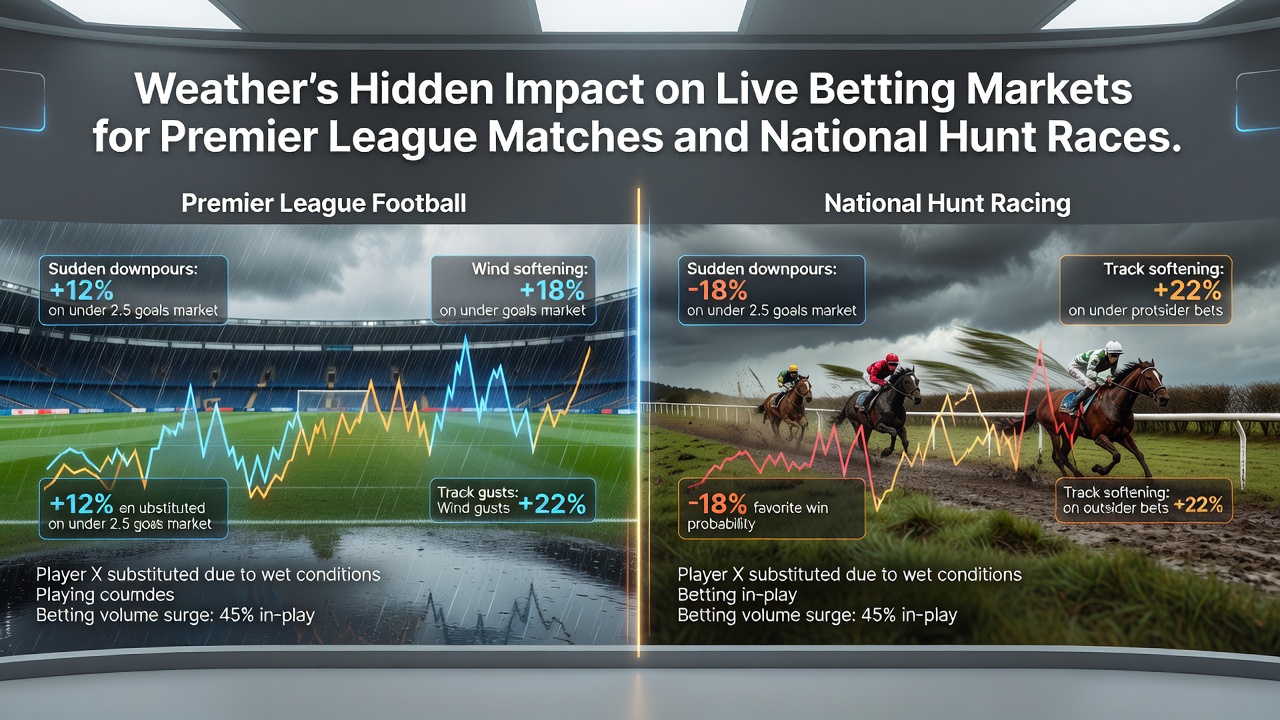
Wind affects hurdle and fence navigation as well, since gusts can push horses off stride at critical moments. Data collected across UK and Irish meetings reveals that fall rates climb when crosswinds exceed certain thresholds, prompting live bettors to favor selections with stronger jumping histories. Platforms respond by widening spreads on place markets and shortening odds on favorites that handle adverse conditions better than their rivals.
Real-Time Data Integration and Market Adjustments
Betting operators integrate live weather feeds into their pricing engines so that odds reflect current pitch or turf states rather than static forecasts. When sudden showers begin during a Premier League half, for example, goal-line markets tighten because reduced visibility and slippery surfaces lower scoring probabilities. Similar mechanisms operate at racecourses where stewards report going changes that alter the relative chances of front-runners versus hold-up horses. Those who monitor multiple data streams notice that the most significant odds movements occur within the first fifteen minutes after weather events begin.
Academic papers published by North American university research teams have examined correlations between precipitation intensity and scoring rates across various football leagues, confirming that wet conditions produce statistically significant declines in total goals. These findings align with patterns observed in National Hunt data where heavier ground correlates with longer winning times and higher attrition among less experienced runners. Operators use such evidence to calibrate their live models and maintain balanced books amid fluctuating demand.
Combined Effects Across Football and Racing Schedules
Days when Premier League matches and National Hunt meetings overlap often see bettors dividing attention between two weather-sensitive environments. A storm system moving across southern England might soften football pitches while simultaneously turning chase courses into testing grounds that favor certain pedigrees. Live platforms adjust multiple markets simultaneously, and those who follow both codes report that cross-sport accumulators require constant re-evaluation when conditions shift. Industry reports from Canadian gaming associations note that integrated data tools have become standard for professionals seeking to exploit these layered variables.
Conclusion
Weather remains an underappreciated driver of live betting volatility in both Premier League and National Hunt contexts because it modifies fundamental performance metrics that odds compilers must track continuously. Data from regulatory bodies and academic sources shows consistent patterns in how rain, wind, and temperature affect outcomes, which in turn shapes the pace and direction of in-play market movements. Bettors who incorporate real-time meteorological information alongside traditional statistics position themselves to respond when conditions change mid-event.