Weather's Subtle Hand in Shaping Betting Prices for Turf Events and Court Matches at Major UK Venues
Written by Blake Weber · Jul 23, 2026
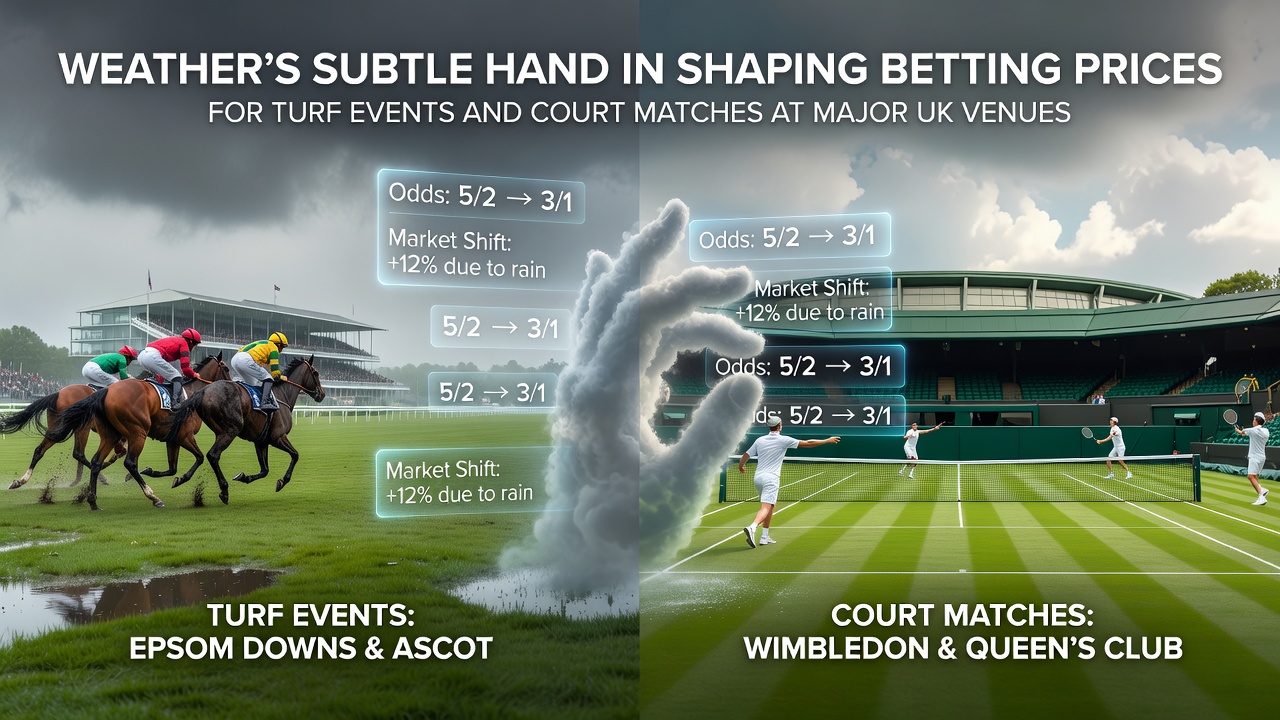
Weather's Subtle Hand in Shaping Betting Prices for Turf Events and Court Matches at Major UK Venues
Weather patterns exert measurable influence on event outcomes at major UK racing tracks and tennis courts, prompting bookmakers to adjust odds in real time as forecasts evolve. Observers note that precipitation, temperature swings, and wind strength alter ground conditions and player performance metrics, which in turn shift market prices for upcoming fixtures at venues such as Ascot, Wimbledon, and Newmarket. Data from meteorological services shows these adjustments occur hours or even days before events begin, creating layered pricing structures that reflect updated probabilities.
Turf Racing Markets Respond to Ground Condition Changes
Horse racing on turf sees the clearest price movements when rainfall changes going descriptions from firm to soft or heavy. Research conducted by the Australian Bureau of Meteorology indicates that each additional millimeter of rain on a racecourse can slow average winning times by fractions of a second, enough to reorder expected finishing orders in sprint and middle-distance events. Bookmakers therefore widen or tighten odds on frontrunners versus stayers once official going reports update, and these revisions often cascade through accumulator markets that include multiple UK meetings on the same card.
July 2026 brings the traditional summer festival circuit, when longer daylight hours coincide with variable Atlantic weather systems. Forecasters anticipate several periods of unsettled conditions across southern England, which historically produce late non-runners and market drifts for horses declared on good ground but forced to race on softer surfaces. Industry reports compiled by the European Pari Mutuel Association document how such drifts concentrate in the final 48 hours before race time, particularly at tracks without advanced irrigation systems.
Court Surface Dynamics at Tennis Venues
Tennis pricing follows a parallel path at grass-court tournaments, where moisture levels affect ball speed and bounce height. Wimbledon’s courts, for instance, lose pace after overnight rain even when covers protect the playing area, leading to longer rallies that favor baseline players over serve-dominant competitors. Studies published by the International Tennis Federation record average rally lengths increasing by 15 percent under damp conditions, prompting oddsmakers to revise match-winner and set-betting lines accordingly.

Wind direction adds another variable at exposed venues such as Queen’s Club and Eastbourne. Data gathered during the 2025 grass-court season revealed that gusts exceeding 25 km/h correlated with higher double-fault rates among players ranked outside the top 30, shifting pre-match odds by as much as 0.3 in decimal terms. Bookmakers incorporate these statistical relationships into automated pricing models that refresh every few minutes during qualifying rounds and early main-draw sessions.
Integrated Effects Across Multi-Sport Accumulators
Many UK bettors combine selections from both codes into single accumulators, which magnifies the impact of weather-driven price changes. When simultaneous rain affects both a Newmarket card and a Wimbledon second-round match, correlated shifts in implied probabilities can create temporary misalignments between different operators. Observers tracking these movements note that sharp bettors often wait for the final weather update before committing to longer-priced combinations, because even modest adjustments in one leg can alter the overall return profile of the ticket.
Regulatory bodies in several jurisdictions, including the Malta Gaming Authority, require operators to maintain transparent records of how external factors such as weather influence live odds. These records show that the largest revisions occur during the 90-minute window before an event when official inspections confirm actual conditions rather than forecast estimates. The pattern holds across both turf and court disciplines, suggesting a consistent market mechanism rather than sport-specific quirks.
Conclusion
Weather therefore functions as a continuous input into pricing engines at major UK venues, prompting systematic revisions that reflect updated performance expectations for horses and players alike. July 2026 events will follow the same established pathways, with ground and surface reports continuing to serve as primary triggers for market movement. Those monitoring the interplay between meteorological data and betting lines gain a clearer view of how these adjustments propagate through both individual and multi-leg wagers.